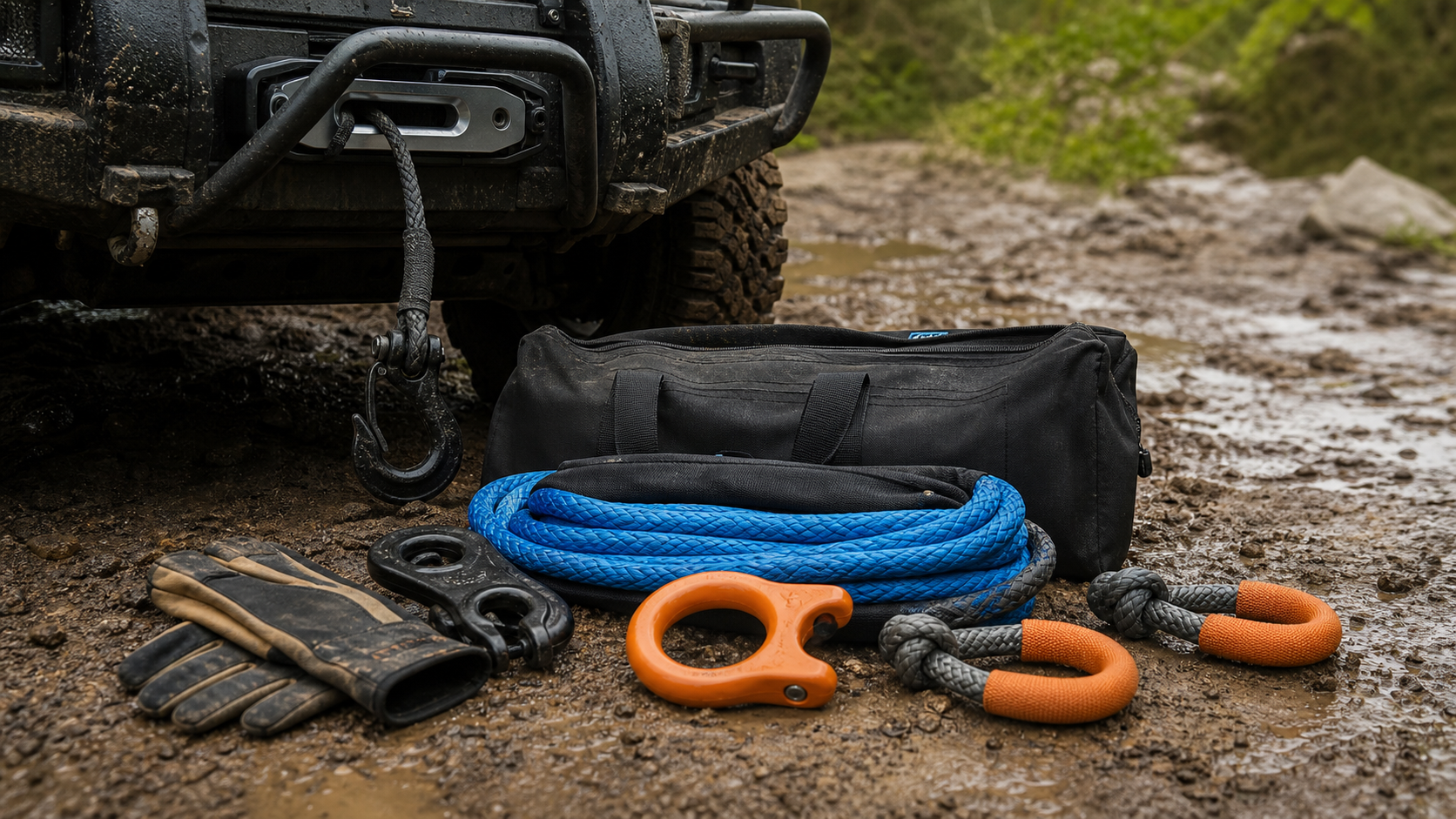


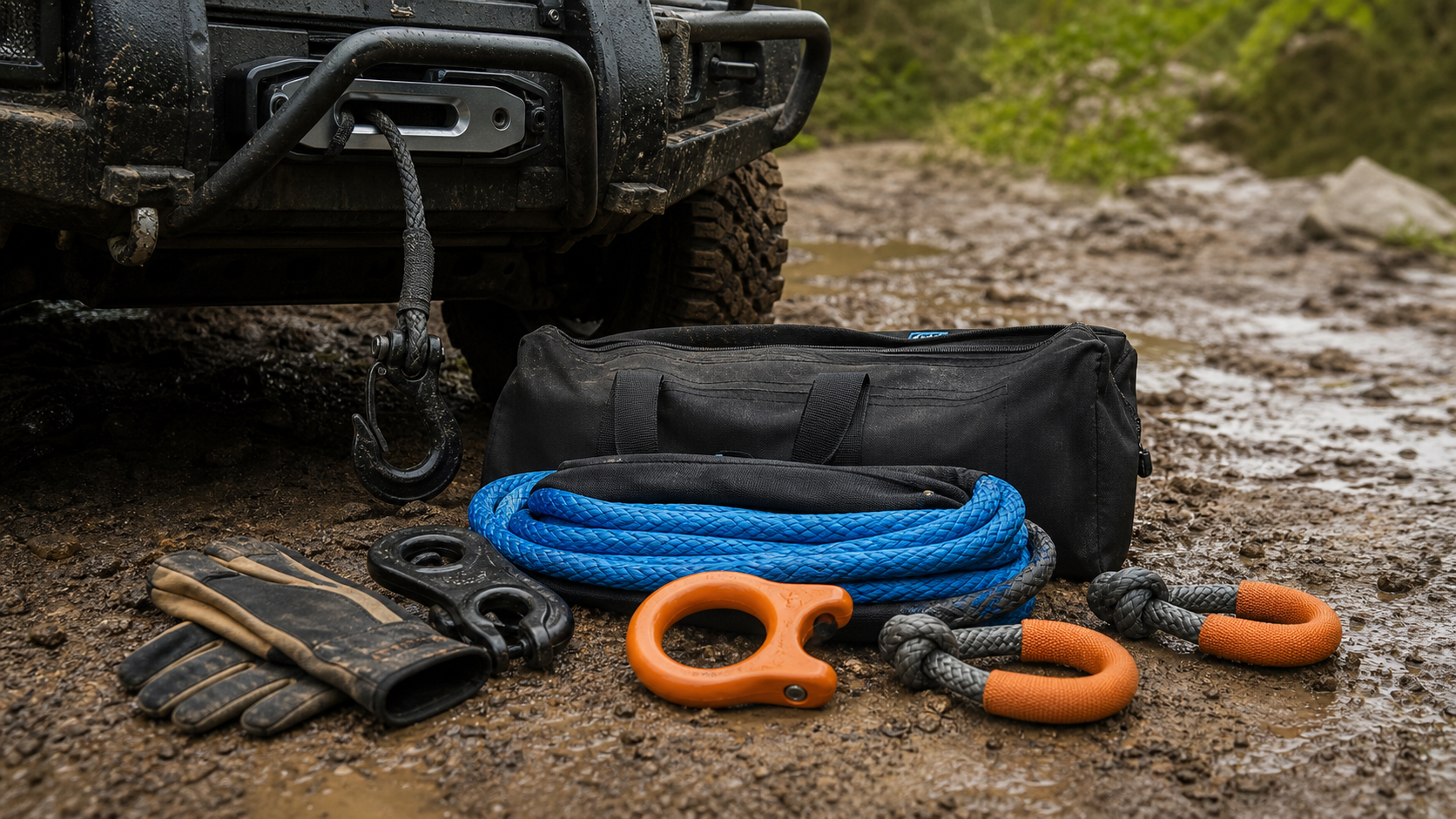
Synthetic winch rope is popular with off-road drivers because it is light, strong and easy to handle. It is easier to work with than steel cable and is well suited to modern winch and recovery set-ups. But synthetic rope also wears out. Anyone who uses their winch regularly needs to know when it needs replacing and which thickness or length is suitable for their setup.
In this blog, we explain what to look out for when choosing synthetic winch rope for your 4×4.
Why choose synthetic winch rope?
Synthetic hawser is lighter than steel wire rope. You’ll notice this during installation, use and when winding it onto the drum. The rope is also more flexible, making it easier to work with when you need to run a line out quickly or reposition it.
Another advantage is that synthetic rope is often less sharp and stiff than steel cable. You won’t be bothered by protruding steel wires, although it’s still a good idea to wear gloves. Off-road recovery remains hard work, especially in mud, sand and when pulling at an angle.
On the other hand, synthetic winch rope requires proper maintenance. Dirt, sand, sharp edges, heat and incorrect coiling can all affect its service life.
When should you replace synthetic winch rope?
It’s wise to replace it as soon as you can no longer rely on the rope. That sounds simple, but in practice, damage is sometimes ignored for too long. You should therefore check your winch rope regularly, especially after heavy recovery operations.
Look out for these signs:
- frayed edges or obvious signs of wear;
- cuts caused by stone, a bumper or a sharp edge;
- flat or hard sections in the rope;
- discolouration caused by heat or chemical contamination;
- damaged cover or protective sleeve;
- knots tied under heavy load;
- rope that has been pulled unevenly or deep into the drum.
A few minor signs of wear and tear needn’t necessarily be a problem, but deep damage is a different matter. If in doubt, don’t take any chances. A winch rope is under high tension during recovery.
Which thickness should you choose?
The correct thickness depends on the winch, the vehicle’s weight, the application and the space available on the drum. Lensen Products offers, amongst other things, 13 mm and 15 mm winch ropes, each 45 metres long. Both sizes are designed for serious recovery use, but the choice must suit your setup.
A thicker rope often has a higher breaking strength, but also takes up more space on the drum. A thinner rope may be more practical if you need more length or if your winch has less drum space. So it’s not just a question of ‘as thick as possible’, but of finding the right combination of strength, length and winch capacity.
Always check:
- the specifications of your winch;
- the recommended rope thickness;
- the required breaking strength;
- the drum capacity;
- the type of fairlead you use.
For heavy-duty 4x4s or intensive use, it makes sense to opt for a larger size, but oversizing without taking the winch into account isn’t necessarily better.
What length is best?
Many synthetic mooring ropes are supplied in long lengths, for example 45 metres. This gives you reach when the anchor point is further away. However, in practice, you don’t always use the full length.
When using a winch, it is important to keep enough rope on the drum. Too little rope on the drum can affect grip and safety. At the same time, you want to prevent the rope from becoming tangled or winding up incorrectly under tension.
A longer rope is useful in open terrain or when trees, anchor points or other vehicles are further away. In tight spaces, you can often work more effectively using a snatch ring or other recovery setup.
Use a suitable fairlead
Synthetic winch rope requires a smooth and suitable fairlead. The fairlead guides the rope as it leaves the winch. A damaged or incorrectly fitted fairlead can cause the rope to wear out more quickly.
Pay particular attention to sharp edges, burrs or old wear and tear from a previous steel wire rope. Are you switching from a steel wire rope to a synthetic rope? If so, check carefully whether your fairlead is still suitable. A new, smooth fairlead is often a sensible upgrade.
Rolling up: neat and tidy
Reeling the rope up properly will extend its service life. Reel the rope up evenly, keeping it under slight tension. This will prevent the rope from lying loosely on the drum or, under heavy load, becoming deeply embedded between previous turns.
It is important to clean the rope after using it in mud or sand. Rinse any dirt out of the rope, leave it to dry and roll it up neatly. Sand acts as an abrasive and can damage the fibres if left on the rope.
Protect the rope during recovery
Synthetic mooring rope is strong, but susceptible to damage from sharp edges. Where necessary, use a protective cover or reroute the line so that the rope does not rub against stone, steel or a sharp bumper edge.
Make sure you use the right accessories too:
- soft shackles for secure connections;
- a snatch ring for pull direction or a double line;
- gloves for grip and protection;
- robust recovery points;
- a suitable winch control system, so that you can operate it remotely.
Make sure that all components are of a suitable strength. A strong winch rope is of little use if the attachment point or shackle is not suitable for the load.
Storing and maintaining synthetic winch rope
Proper maintenance is simple, but is often overlooked. Rinse mud and sand out of the rope, leave it to dry and check it for damage straight away. Store loose rope in a dry place, away from direct sunlight, when it is not on the winch.
Do not use harsh cleaning products. Clean water is usually sufficient. The main aim is to remove abrasive dirt from the fibres.
Conclusion: choose a winch rope that suits your winch and its application
Synthetic winch rope is a strong choice for off-road driving and vehicle recovery, provided you choose and maintain it properly. Pay attention to the thickness, length, breaking strength, fairlead and any visible wear and tear. Replace damaged rope in good time and use it in conjunction with suitable recovery accessories.
Take a look at Lensen Products’ synthetic winch ropes and winch accessories to put together a reliable and practical 4×4 setup.