Hydraulic winches are a top choice for heavy recovery and intensive use. Instead of running on battery power, they use the hydraulic pressure of the vehicle (usually via the power steering or a separate hydraulic pump). This makes them especially popular with expedition/work vehicles, recovery vehicles and 4×4s that need to winch often and for a long time.
Key benefits
Prolonged winching without overheating: ideal for long or repeated pulls.
Constant traction in continuous use: less dependent on battery capacity.
Robust for heavy-duty work: strong in professional and heavy duty applications.
Points of interest
More complex installation: hoses, couplings, pump/valves and correct integration with the hydraulic system.
Engine should be running most of the time: without a running engine, there is often no (or limited) hydraulic flow.
Speed may vary: depending on speed and available flow/pressure.
More components = more tuning: Correct sizing (pressure/flow) is crucial for performance.
A hydraulic winch is a smart choice when you reliable, repeatable traction needed for long-term and heavy use, especially at heavy recovery or professional work.
Works as long as the motor is running: no battery drain as with an electric winch, so ideal for long treks.
Suitable for frequent use: built for work; perfect if you often winch (forestry, salvage, expedition/support vehicles, utility vehicles).
Constant performance under load: less suffering from voltage loss or heat problems that can slow down electric winches.
Strong for heavy vehicles: widely used on heavier 4x4s and trucks where recovery loads are high.
Works best with the right winch accessories
When less suitable: if you have a easy (DIY) installation want, need winch power with the engine off, or mainly drives off-road recreationally from time to time, then an electric winch is often more practical.
Installation & use: safe and effective winching
A winch is a powerful tool-and that is precisely why correct use is so important. With the right approach, winching is one of the safest ways of recovery. Without preparation or the wrong techniques, it can be risky.
Installation checklist (basic)
Before you hit the trail, make sure:
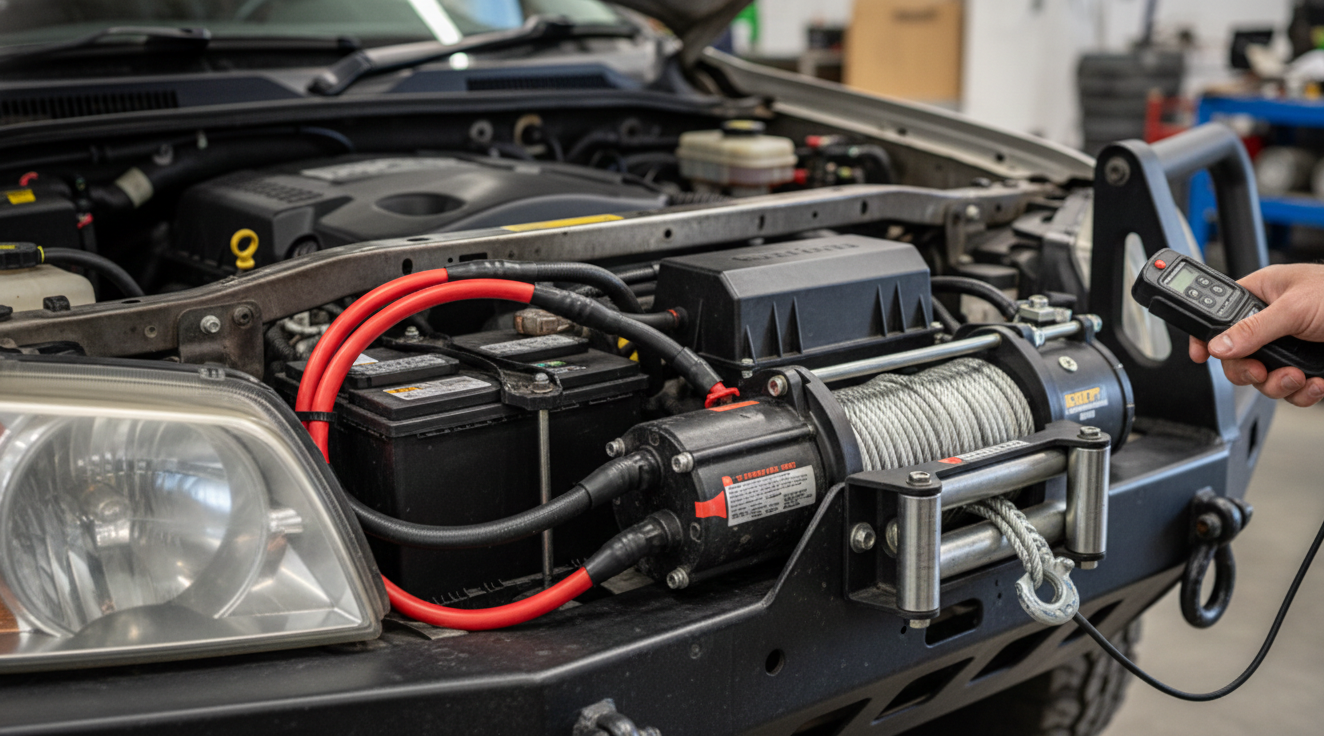
The winch is securely mounted on a suitable winch bumper or mounting plate
The electrical cabling is connected correctly and protected
Your battery is in good condition (winch load is high)
Your fairlead matches your rope or cable
The controls have been tested (for emergencies)
Installation checklist (basic)
Safe winch steps (recommended course of action)
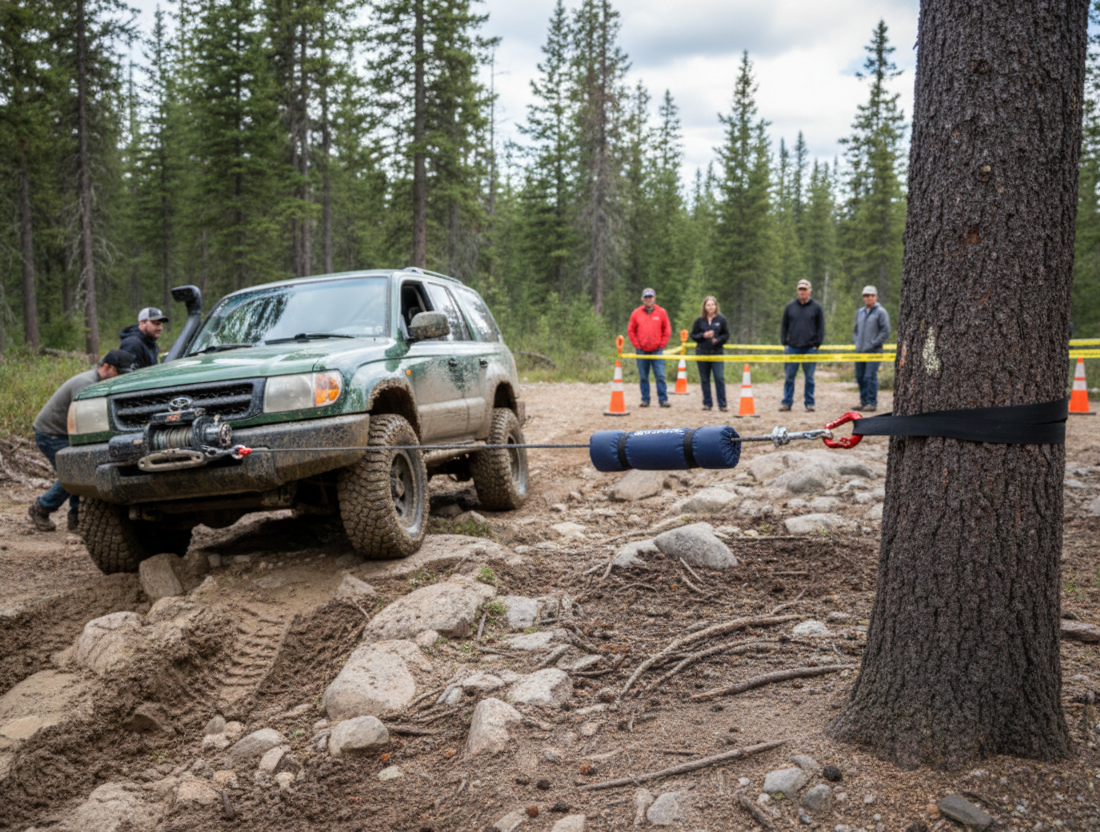
Check rope/cable and hook before pull
Choose a strong anchor point and use secure fixing
Keep bystanders at a distance
Preferably use a damper on the line
Pull gently and controlled-no shock loading
Beware of heat in motor and cables during long pulls
Roll back the rope neatly under slight tension
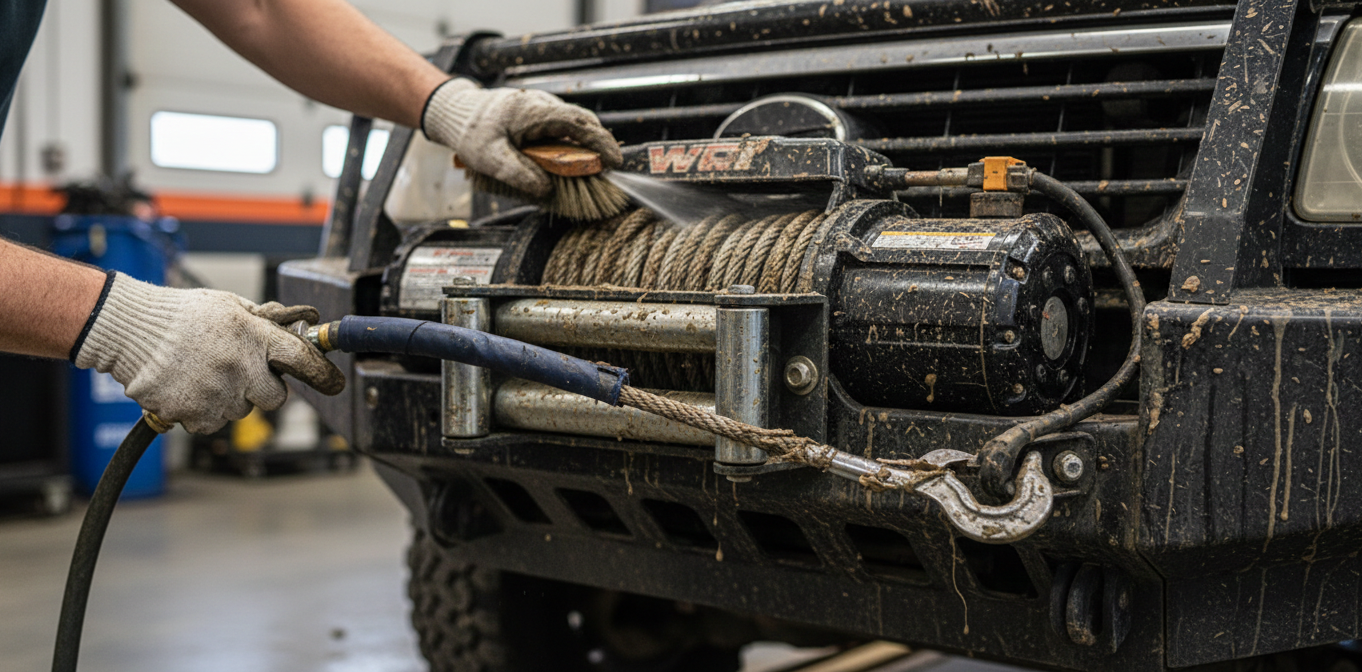
Maintenance: keeping your winch reliable
A good electric winch deserves proper maintenance:
A safe guideline is to opt for about 1.5x to 2x the total weight of your vehicle, including load. Mud, sand and slopes often require more power, so a higher capacity gives extra security.
Synthetic rope is lighter, easier to use and often perceived as safer. Steel rope is more durable, but heavier and can fray. The right choice depends on your riding style, terrain and personal preference.
A winch bumper is one of the most sturdy and popular solutions, but not always mandatory. Some vehicles use a mounting plate or chassis bracket. The important thing is that the mounting is strong, correct and safe.
Many customers can install a winch themselves with proper tools and mechanical knowledge. However, correct mounting strength, wiring safety, and fairlead alignment are critical-if you're not sure, it's best to ask for advice.